News
Demonstration campaign through RHINOCEROS prototype
24/11/2026
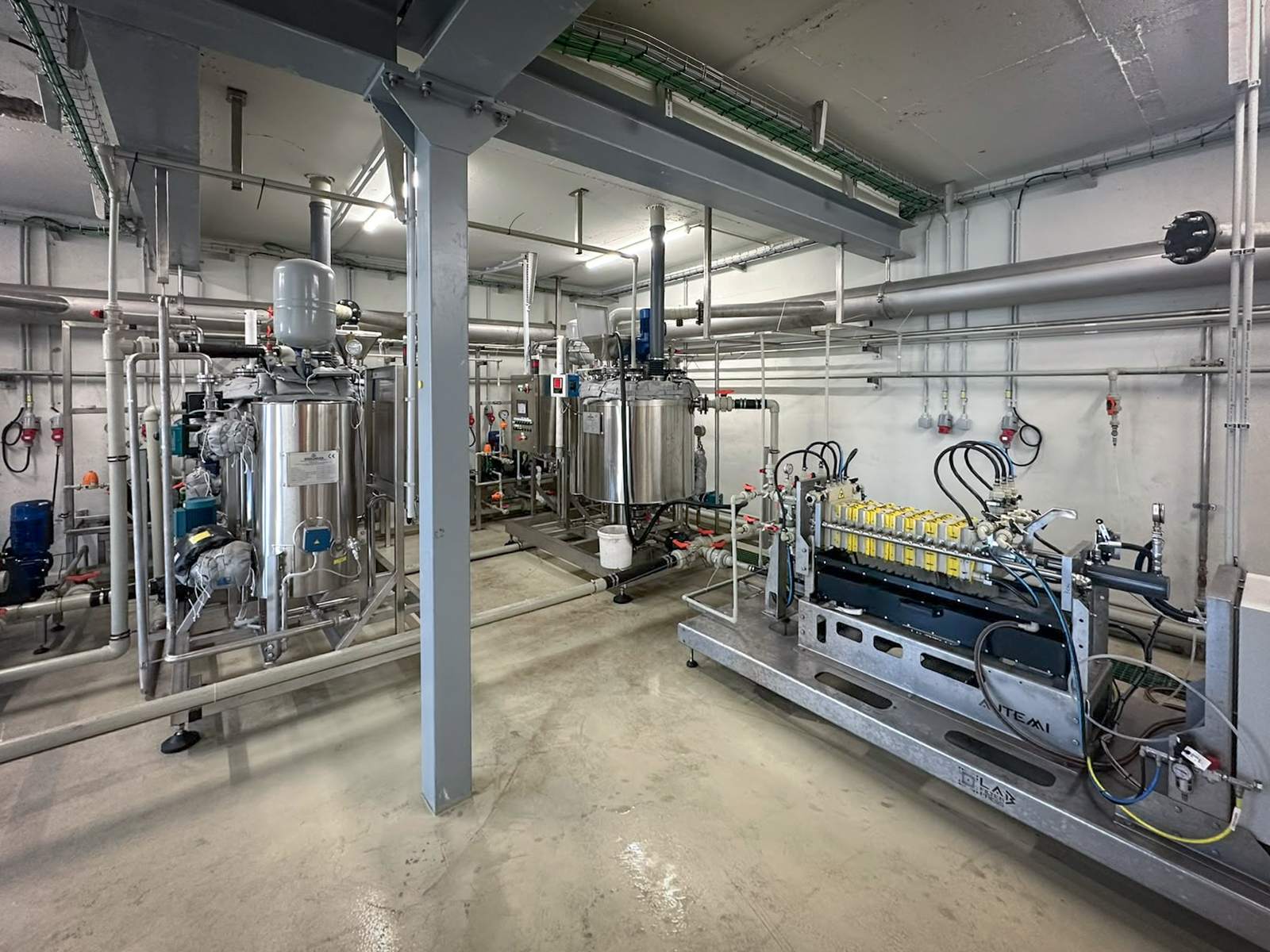
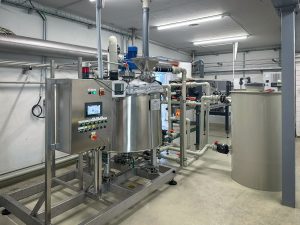
After laboratory testing, the RHINOCEROS hydrometallurgical process has moved into a pilot plant and run for about two months. The demonstration campaign aimed to validate how the innovative solvometallurgical technology developed by TECNALIA (using as feed the black mass produced by ACCUREC) could be used at a prototype scale to produce cathode and anode material for the production of new pouch cells starting. This demonstration activity was carried out using the prototype built within the project by JGI-HM and designed by ECO Recycling (ECO).
JGI-HM completed construction and commissioning of the prototype in July 2026, reaching one of the last project milestones. ECO Recycling (ECO), responsible for basic and detailed engineering activities within the project, supported JGI-HM during construction activities.
During the campaign, the prototype produced both graphite (anode material) and mixed precursors of nickel, manganese and cobalt lactate from recycled battery black mass, which were subsequently transformed through heat treatment into active cathode material for use in new battery electrodes.
The prototype trials achieved the following recovery results, which are comparable with the ones obtained in earlier laboratory scale:
| Metal | Leaching yield | Precipitation yield |
| Nickel | 81.9% | 78.3% |
| Manganese | 95.4% | 72.5% |
| Cobalt | 92.4% | 88.0% |
-
- © JGI-HM
-
- © JGI-HM
Process validation and consideration after upscaling process
Performed demonstration activities were sufficient to optimise and validate the technology developed at laboratory scale at TRL6, prototyping the process. During this period, TECNALIA supported the transfer of laboratory procedures to the pilot plant and the adjustment of operating conditions.
This demonstration campaign confirmed that the validated laboratory process could be successfully transferred to a larger scale while maintaining the process performance achieved during laboratory development. The optimisations of process condition performed are listed below:
- reagent quantities and addition sequence for reagents: the operating procedure was adjusted by changing the sequence in which slurry and hydrogen peroxide were added and by continuously cooling the process. The hydrogen peroxide quantity was optimised along with the precipitation time, with and without seeding, which allowed researchers to achieve the most suitable operational conditions and the best yield possible;
- precipitation (e.g. operative time, temperature).
In addition to this, the implementation of the demonstration campaign provided the opportunity to better understand several aspects such as the risks associated with the production of foaming and the temperature increasing during leaching (which required closer control) and gas emission which will be considered in the engineering of this technology at a higher TRL in the future.